

Some mornings, getting out of bed is a struggle even when you went to bed early. By the clock, you seem to have had plenty of sleep, yet you are already yawning on your way to work.
“I thought I slept enough. Why do I still feel this way?”
How long you sleep does not tell the whole story. To understand your sleep, it helps to look at how much you slept, how you slept through the night, and how you felt during the day together.[1]
| Sleep duration | Waking during the night | How you feel during the day |
|---|---|---|
| Did you allow enough time for sleep? | Did you wake often or struggle to fall back asleep? | Did sleepiness or fatigue persist during daily activities? |
1. Time in bed is not always time asleep
If you went to bed at 11 p.m. and got up at 7 a.m., you spent eight hours in bed. But if you looked at your phone or lay awake for a while before falling asleep, your actual sleep time may have been shorter.
The U.S. Centers for Disease Control and Prevention (CDC) recommends at least seven hours of sleep a day for adults aged 18–60. Sleep needs vary with age, and both enough sleep and good sleep quality matter.[1]
Start by thinking about the gap between when you went to bed and when you felt you fell asleep.
2. Think about how you slept through the night
The total sleep time you see in the morning cannot tell you everything about your night. It is also worth considering whether you had trouble falling asleep, woke repeatedly, or found it hard to get back to sleep.
The CDC identifies these difficulties, along with sleepiness or tiredness after enough sleep, as signs to pay attention to sleep quality.[1]
Make a brief note of anything you remember. One sentence is enough: “I woke in the early morning and lay awake for a long time.”
3. Add your daytime experience to your morning impression
Note how refreshed you felt when you woke up and whether it was hard to stay awake in the afternoon. You can also add any habits that come to mind, such as a late coffee or a nap the day before.
The sleep diary from the U.S. National Heart, Lung, and Blood Institute (NHLBI), part of the National Institutes of Health, also includes sleep duration and quality, daytime sleepiness, and habits such as caffeine and alcohol consumption. These notes can help you reflect on your sleep and discuss it with a healthcare professional.[2]
WELLUNE helps you keep a record while you sleep
You can write down how refreshed you feel in the morning, but it is harder to observe your own sleep and breathing while you are asleep.
Without requiring you to wear a device, WELLUNE automatically records your sleep and breathing so you can review them in the app in the morning.
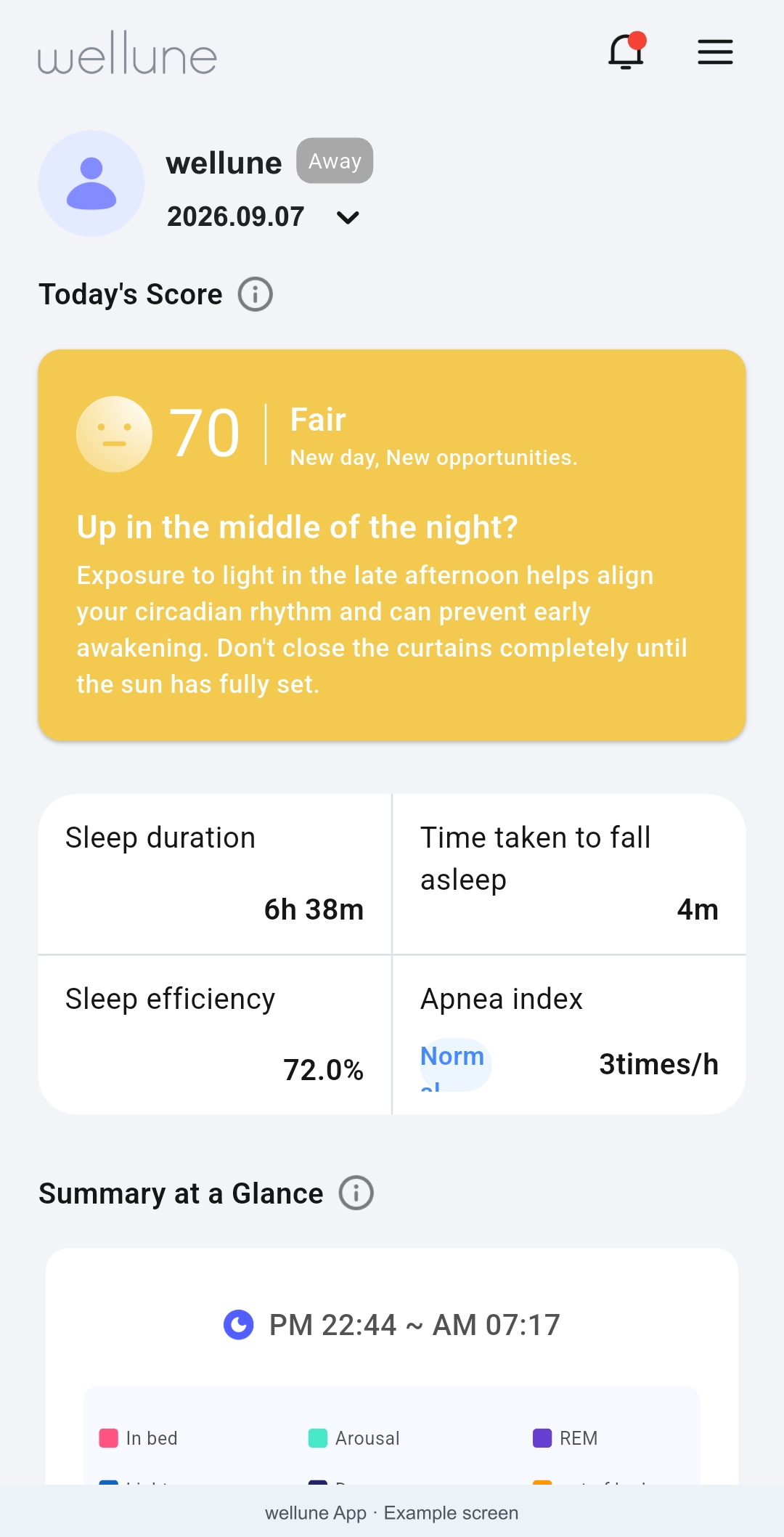
As you review your records in the morning, add your own observations, such as “I feel refreshed today” or “I was very sleepy this afternoon.” Looking at your overnight records alongside your daytime experience can be a starting point for understanding your sleep.
Explore WELLUNE’s sleep recording features →
If sleep problems recur, or sleepiness and fatigue continue despite enough sleep, talk to a healthcare professional. The notes you have kept can help you explain what you are experiencing.[1]